Chair Sitting Habits

Posture awareness, seated movement patterns, and ergonomic chair setup — practical reference for people who spend most of their workday seated.

Ergonomic chair setup principles

A correctly adjusted chair reduces static muscle load and supports natural spinal alignment throughout long seated periods.

Seat height

Adjust seat height so your feet rest flat on the floor with knees at approximately 90 degrees.

Thighs should be roughly parallel to the floor
Avoid seats too high that lift your legs or too low that compress them
Use a footrest if your feet don't reach the floor comfortably
Backrest and lumbar

The backrest should support the natural inward curve of the lower spine without forcing an exaggerated arch.

Position lumbar support at the small of the back, roughly waist level
Maintain light contact between lower back and backrest
Avoid slumping — periodically reset your seated position

Armrest position

Armrests support upper arm weight and reduce shoulder elevation during computer use.

Set armrests so elbows bend at roughly 90 degrees when resting
Avoid resting arms on armrests while actively typing
Remove armrests if they force your shoulders upward

Seat depth and tilt

Seat depth affects thigh circulation and back contact — a common but often overlooked adjustment.

Leave 2–4 finger widths between the seat edge and the back of your knees
A slight forward tilt (3–5 degrees) can reduce lumbar flexion for some people
Flat or slightly reclined is appropriate for others — personal preference applies
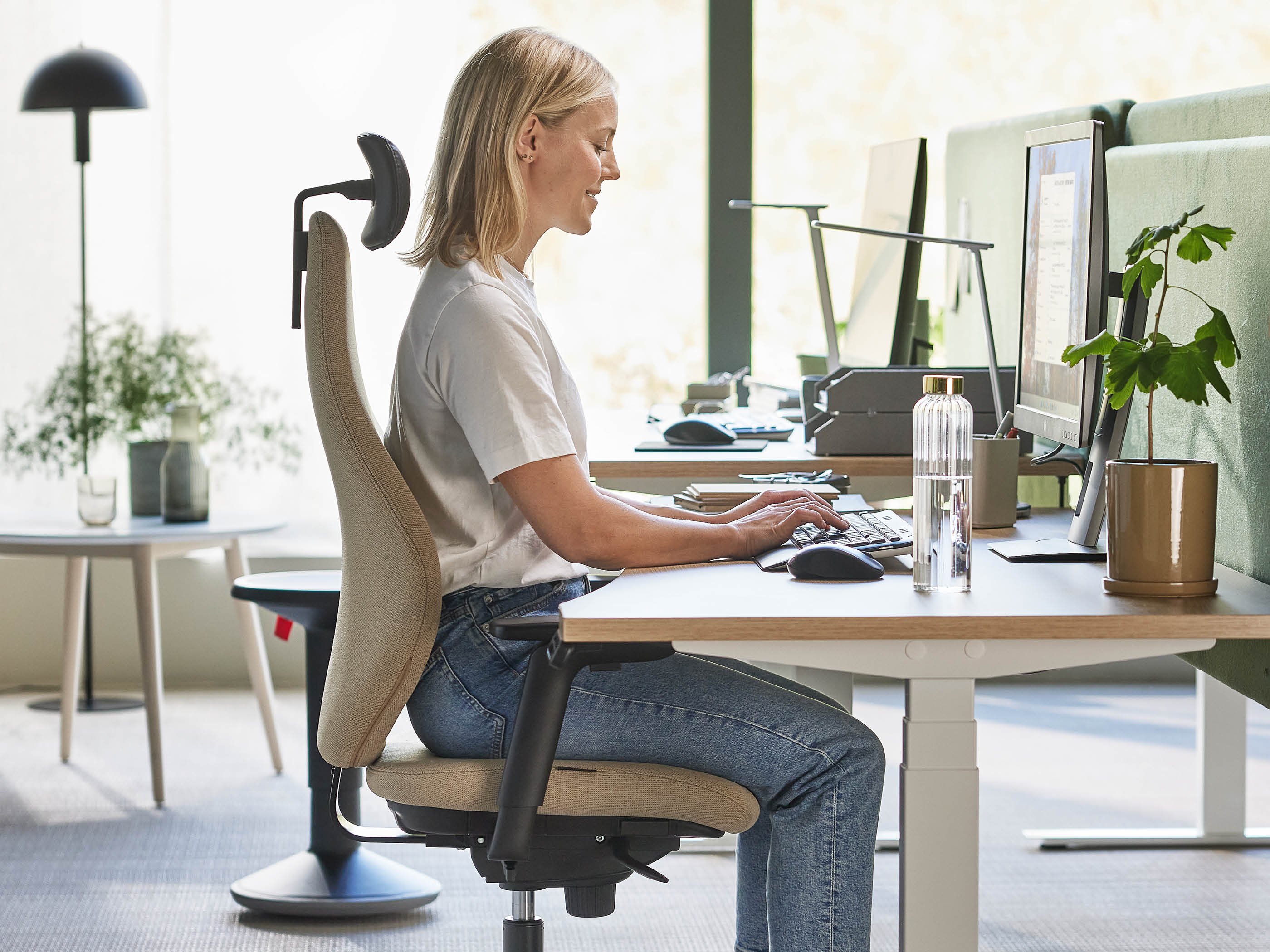
Office worker seated with correct posture at an ergonomic desk setup, feet flat on floor, back supported, screen at eye level
Example of correct seated posture at an office desk

Seated movement habits to build

Small, repeatable actions that gradually shift how you sit and move throughout the workday.

Postural reset check-in
Every 30 minutes, pause briefly to adjust your seated position back to a neutral alignment — spine tall, feet flat, shoulders relaxed.
Position variation
Alternate between slightly different seated positions throughout the day. No single posture, however good, is ideal for extended periods.
Stand-up transitions
Plan at least one full standing transition per hour — even if just to get water, use the printer, or take a phone call standing up.
Micro-movements while seated
Gentle ankle circles, knee lifts, seated spinal rotations — brief movements that can be done without leaving your chair during calls or reading tasks.

Personal movement schedule builder

Enter your work schedule details to generate an example daily movement plan aligned with your working hours.

Configure your schedule

Seated movement exercises

Exercises you can perform without leaving your chair — suitable for open-plan offices or focused work periods.

Seated spinal rotation

Sit tall, place one hand on the opposite knee. Gently rotate your torso. Hold 20 seconds each side. Keep hips and feet facing forward.

1 min Chair Light
Ankle circles

Lift one foot slightly off the floor. Rotate the ankle in wide circles — 10 each direction. Switch legs. Supports lower leg circulation during prolonged sitting.

1 min Chair Light
Seated knee lift

Sit upright. Slowly lift one knee toward your chest, hold for 3 seconds, lower. Alternate legs for 10 repetitions each. Engages core and hip flexors.

2 min Chair Light